The Real Cost of a Disorganized Baking Pantry in Indian Kitchens
You reach for a jar of maida to bake a weekend cake, only to find it crawling with tiny brown beetles. Or worse, your expensive imported couverture chocolate and brown sugar have turned into solid, moisture-logged bricks long before their expiry dates.
This is the daily reality in urban Indian homes, where tropical heat and aggressive monsoon humidity turn unprotected baking ingredients into breeding grounds for pests. FSSAI storage guidelines for dry commodities mandate moisture-free, tightly sealed environments to prevent microbial growth and insect infestation, yet standard cardboard boxes and flimsy plastic pouches leave your pantry entirely defenseless. Those tiny flaps and standard zip-locks do not block local meal moths (Plodia interpunctella) or airborne moisture during the rainy season.
Ignoring proper storage exacts a heavy toll. Households lose an average of ₹1,200 per year on spoiled maida, baking powder, icing sugar, and specialty chocolate chips due to humidity and contamination. Beyond wasted groceries, cluttered shelves lead to endless frustration, expired ingredients, and failed baking projects when you cannot find what you need.
Here is the harsh reality: upgrading your baking storage is not about aesthetics—it is a mandatory step for hygiene, pest control, and long-term kitchen efficiency.
Volumetric Container Math: Matching Dry Goods to Exact Quart and Liter Sizes
Buying pantry containers by visual appeal alone leads to a common kitchen disaster: a 1 kg packet of refined flour overflowing onto your kitchen counter because the canister holds barely 800 ml. Indian retail packaging relies on metric weight (grams and kilograms), while global storage accessories often reference archaic quart volumes. You must convert weight to volume before investing in storage.
Let's look at the numbers:
- Maida (Refined Wheat Flour): 1 kg occupies roughly 1.9 to 2.1 liters of space. However, to account for scooping and prevent spills during monsoon compaction, 1 kg of maida requires a minimum 2.4-liter container with head-room.
- Aashirvaad or Local Whole Wheat Atta: Denser and finer than maida, 1 kg demands a 2.2-liter airtight canister.
- Caster Sugar and Bura: Fine crystals pack tightly, meaning 1 kg fits comfortably into a 1.2-liter to 1.4-liter vessel.
- Icing Sugar and Cocoa Powder: Highly aerated powders require a generous volume ratio; 500 grams of cocoa powder needs at least a 1.5-liter container.
Consider your hardware dimensions as well. A standard essential baking tools for home bakers set—crucial for precise eggless cake ratios—requires a container opening with a minimum 9 cm diameter requirement. Anything narrower forces you to dump ingredients out, creating unnecessary mess and attracting ants.
FSSAI packaging protocols emphasize that dry staples absorb ambient moisture rapidly in tropical climates, increasing their volume and inviting microbial growth. Factor in a 15% headspace buffer for every container you purchase. This ensures your lids seal completely flush without compressing the flour, maintaining the precise aeration your baking recipes demand.
Weight-Capacity Stress Test: Wire Shelves, Tension Rods, and Heavy Bakeware
Standard builder-grade particle-board cabinets common in Indian modular kitchens flex under heavy loads, especially during high-humidity monsoon seasons when wood composites absorb moisture and lose structural integrity. Stacking heavy cast-iron Dutch ovens, multiple 28 cm aluminium cake tins, and 5 kg bags of maida requires precise load-bearing awareness to avoid catastrophic shelf collapse.
The good news? Understanding exact weight thresholds keeps your bakeware accessible and your kitchen compliant with safe storage limits. Here is how common organizing hardware performs under stress tests designed for Indian baking setups.
| Organizer Type | Max Safe Load Limit | Common Failure Point | Best Use Case in Indian Kitchens |
|---|---|---|---|
| Coated Wire Shelves | 12 kg per tier | Sagging at center welds under point loads | Storing light silicone molds, plastic cookie cutters, and piping bags. |
| Tension Rod Dividers | 8 kg total holding power | Slippage against laminated modular cabinet walls during load shifts | Vertical sorting of baking sheets, cooling racks, and thin aluminum trays. |
| Solid Steel Risers | 20 kg total capacity | Surface scratching on weak particle-board bases | Elevating heavy ceramic mixing bowls and cast-iron bundt pans. |
| Acrylic Vertical Sorters | 5 kg per partition | Cracking under sudden impacts from heavy stoneware | Organizing muffin tins, parchment paper stacks, and flat lids. |
When organizing heavy baking supplies, distribute dense items like bulk flour containers directly over vertical cabinet support studs rather than relying solely on adjustable shelf pins. Pair high-capacity steel risers with moisture-absorbing silica gel pouches to protect both your hardware and your FSSAI-compliant dry ingredients from seasonal warping.
Rental Kitchen Hacks: Organizing Baking Supplies Without Drilling
Wondering how to pull this off without losing your security deposit?
Renting an apartment in metropolitan India usually means facing a strict landlord policy against drilling holes into tiled kitchen walls or expensive modular cabinetry. Yet, housing your collection of baking essentials—from heavy bags of maida and cocoa powder to delicate decorating nozzles—demands vertical space efficiency.
You can completely bypass permanent fixtures using smart, pressure-mounted, and adhesive-backed storage solutions that comply with standard consumer protection expectations for temporary installations.
Deploy heavy-duty 3M Command strips rated for up to 5 kg on the interior sides of your kitchen cabinet doors. Hang lightweight wire baskets from these hooks to instantly store packets of baking powder, vanilla extract bottles, and gelatin sheets, keeping them clear of the main shelf space.
To tackle deep, dark lower cabinets where your baking molds and silicone mats often disappear, abandon fixed wooden shelving for freestanding acrylic tier racks priced around ₹799 – ₹1,499. These modular step-risers require zero installation tools and allow you to view every spice, food color gel, and dusting sugar at a single glance.
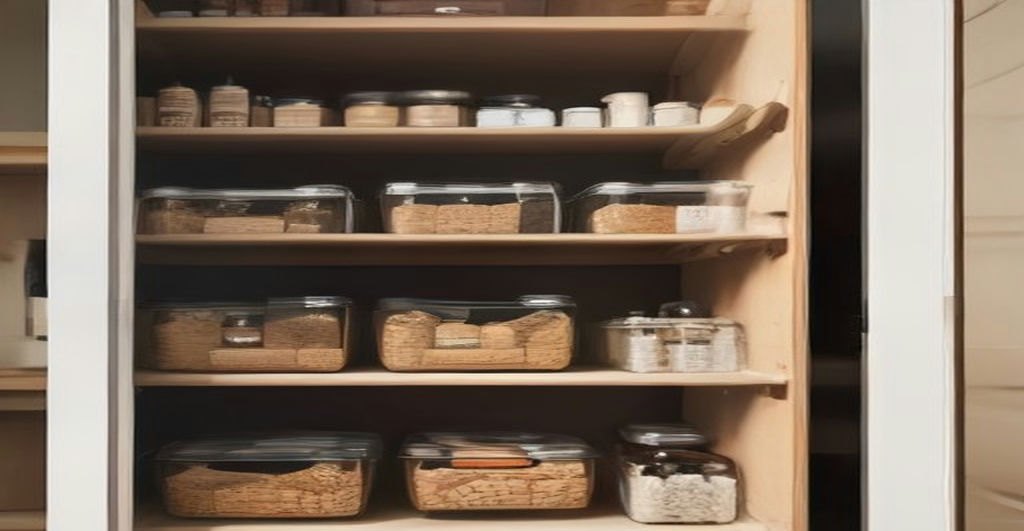
Finally, maximize the dead space underneath your existing wire or wooden pantry shelves by sliding on coated-wire under-shelf baskets. These slide right onto shelves ranging from 1.5 cm to 2.5 cm in thickness, offering an immediate home for parchment paper rolls, piping bags, and aluminum foil sheets without leaving a single scratch on your rental kitchen surfaces.
Step-by-Step Blueprint to Build Your Ergonomic Baking Station
Building a high-performance baking zone requires more than aesthetic jars. It demands a deliberate layout designed to survive Indian kitchen realities, from heavy monsoon humidity to daily handling of atta, maida, and ghee.
Follow this exact sequence:
Step 1: Deep clean and UV-sterilize shelves against grain mites
- Empty your pantry cabinet completely. Wipe interior walls and wire racks using a mixture of warm water and white vinegar to eliminate fungal spores.
- Run a portable UV-C sterilization wand across all wooden or laminate surfaces for 15 minutes to neutralize dormant grain mite eggs and insect larvae.
- Line shelves with food-grade, moisture-resistant EVA shelf mats to prevent direct contact between containers and wooden surfaces prone to dampness.
Step 2: Apply thermal-transfer vinyl labels resistant to oil and humidity
- Discard standard paper labels that disintegrate when exposed to kitchen steam or buttery fingers. Invest in matte thermal-transfer vinyl label sheets.
- Print ingredient names, batch numbers, and exact FSSAI-compliant expiry dates using a thermal label maker. Thermal-transfer ink will not smudge when exposed to spills of cooking oil or melted butter.
- Affix labels to the bottom-front or lids of your airtight containers rather than the main body, ensuring visibility even when stacked tightly in deep drawers.
Step 3: Group by frequency of use and microclimate needs
- Place heavy staples like 5 kg bags of maida, whole wheat flour, and castor sugar in lower pull-out drawers equipped with heavy-duty tandem runners (rated for 40 kg to 50 kg loads).
- Store delicate, temperature-sensitive items—such as baking chocolate, active dry yeast, and pure vanilla extract—in dedicated airtight acrylic canisters on eye-level pantry shelves away from the stove's ambient heat.
- Position frequently used tools (measuring spoons, silicone spatulas, whisk) in a narrow pull-out spice and utility pull-out right beside your countertop work zone to minimize unnecessary bending and reaching.
Before you buy anything, let's address these common concerns:
Frequently Asked Questions About Baking Pantry Organization
How do I prevent heavy glass baking dishes from bowing wire shelf inserts in deep lower cabinets?
Wire shelving is notoriously prone to sagging under the crushing weight of heavy Pyrex baking dishes, cast-iron skillets, and stoneware mixing bowls. To fix this, ditch the standard wire inserts entirely. Retrofit your deep lower cabinets with heavy-duty, bottom-mounted steel pull-out drawers rated for at least 30 kg to 45 kg of load capacity, sourced from reliable Indian hardware brands like Hettich or Hafele. When loading these pull-outs, distribute the weight strategically: place the densest items—like cast-iron kadhai or large ceramic tart pans—directly over the runner tracks on the sides, rather than pooling all the weight in the absolute center of the pull-out base. If you must use existing wire shelves, reinforce the underside with a vertical wooden support prop or swap the flimsy wire rack for a solid 18mm marine-grade plywood shelf treated against monsoon moisture.
What is the exact container size needed to fit a standard 2.2 kg (5 lb) bag of flour plus extra headroom for a measuring scoop?
A standard 2.2 kg (5 lb) bag of maida (all-purpose flour) or whole wheat atta requires a minimum container capacity of 3.2 Liters. However, flour cannot be poured flush to the brim if you intend to keep a standard 250 ml measuring scoop buried inside the container without spilling powder every time you open it. Aim for a 4.0 Liter to 4.5 Liter airtight canister. This specific headroom allowance ensures you can easily slide your scoop through the contents, aerate the flour before baking, and snap the airtight silicone-gasket lid shut without creating a powdery mess on your kitchen platform—a crucial step for maintaining pest-free dry goods compliant with FSSAI safe-storage advisories.
How can I protect brown sugar from turning into a rock-hard brick during Indian monsoon humidity?
Monsoon moisture spells disaster for open bags of brown sugar, causing the natural molasses to dissolve and recrystallize into solid blocks. To combat high coastal or tropical humidity, transfer your brown sugar immediately into a heavy-duty, food-grade plastic or borosilicate glass container featuring a silicone-sealed, clamp-lock lid. For absolute protection, drop a food-safe terracotta brown sugar saver disk (soaked in water and patted dry beforehand) directly into the canister, or slip a clean food-grade silica gel packet underneath the lid's inner rim to absorb ambient moisture before it wrecks your baking ingredients.