
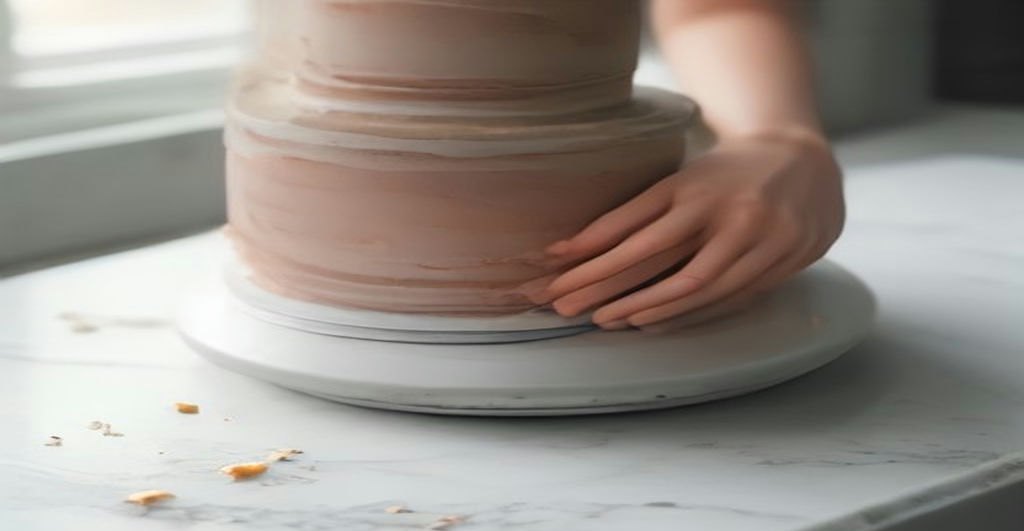
The Wobble Trap: Why Cheap Turntables Ruin Your Cakes
Picture this: you are carefully smoothing a rich chocolate ganache onto a 1 kg birthday cake, holding your palette knife steady, only for the platform to jerk mid-spin because of cheap plastic ball bearings. Suddenly, your sharp edges are smudged, your buttercream is uneven, and hours of baking effort are compromised by lateral play. Worse still, if you work on standard granite or polished marble kitchen slabs common in Indian homes, lightweight plastic bases with worn-out rubber feet will slide completely across the counter during heavy border piping.
This friction failure happens when low-grade materials cannot handle the torque of manual decorating, turning a relaxing kitchen project into an exercise in frustration. You need stability that anchors to stone countertops while delivering butter-smooth rotation.
Here's the catch: solving this isn't about spending ₹5,000 on heavy-duty commercial bakery stainless steel; it is about understanding surface friction coefficients and choosing a turntable engineered with heavy ball-bearing tracks and high-traction silicone base rings.
Anatomy of a High-Performance Cake Turntable
Let's look at the mechanics:
Investing in a robust rotation platform changes everything. A high-performance cake turntable relies on precision engineering to eliminate friction, lateral play, and frustrating rotational jerk. When you evaluate build quality, material selection dictates both longevity and food safety compliance under FSSAI guidelines for kitchen equipment.
Heavy-duty cast aluminium models effortlessly support up to 10 kg without sagging, making them ideal for multi-tiered wedding cakes and heavy fondant creations. Unlike fragile acrylic or warping plastics, cast aluminium or food-grade stainless steel platforms provide absolute structural rigidity. Beneath this top plate lies the most critical component: the bearing system.
Ball-bearing longevity depends heavily on how well it handles India’s tropical and monsoon humidity. Unsealed, low-grade steel bearings quickly catch moisture, resulting in rust formation and screeching rotations. To prevent this, elite turntables utilize enclosed stainless steel ball bearings packed with food-grade silicone grease. This specific formulation repels ambient moisture, ensuring buttery-smooth, 360-degree spins year after year.
If your current turntable develops an irritating squeak or a noticeable wobble, you do not need to discard it. Follow these steps to restore performance:
- Dismantle the base: Remove the retaining clip or screw securing the top platform to the central spindle.
- Degrease and clean: Wipe away old, gummy residue using a lint-free cloth dipped in isopropyl alcohol.
- Re-lubricate: Apply a thin, uniform layer of food-grade silicone grease—never use standard machine oil or cooking oil, as these attract dust and rancidify—directly onto the raceway and ball bearings.
- Realign: Reassemble the unit, checking for lateral play before locking the spindle back into place.
By prioritizing precision bearings and resilient metallurgy, your equipment will withstand heavy daily use in busy home kitchens and commercial bakeries alike.
Turntable Size vs. Indian Oven and Box Dimensions
Why does this matter?
Getting your frosting smooth is only half the battle. If your rotating platform does not match your baking equipment, you will struggle from oven to delivery. Most residential convection ovens in India—whether built-in models from Faber and IFB or standard OTGs from Morphy Richards and Bajaj—typically house baking tins between 15 cm (6 inches) and 20 cm (8 inches) in diameter.
You must scale your platform choice accordingly. A 30 cm (12-inch) standard turntable perfectly fits 8-inch square cake boxes commonly available across Indian baking supply stores, accommodating 1 kg tall-tier celebration cakes without edge overhang.
Consider how weight and space interact on your kitchen counter. If you bake standard 0.5 kg to 1 kg birthday cakes, a 28 cm to 32 cm aluminium or heavy-duty acrylic platform provides the ideal clearance. Anything smaller risks buttercream smudges against box walls during packaging. Anything excessively larger takes up unnecessary space on standard granite countertops, making it awkward to spin freely while piping borders.
When ordering cake packaging from local suppliers or online packaging stores, check your internal box dimensions against the frosted diameter of your creation. A 30 cm turntable ensures that your finished 1 kg or 2 kg layered sponge slides cleanly into standard Indian bakery boxes without ruining your piped edges or fondant details.
Head-to-Head: Top Cake Turntables Available in India
The good news? The Indian baking market offers reliable gear ranging from budget-friendly hobbyist stands to heavy-duty professional units. Choosing the right platform depends entirely on your daily baking volume, the weight of your creations, and whether you are piping delicate rosettes for a family birthday or constructing multi-tier wedding cakes that demand absolute structural stability.
Review this direct comparison of top-rated turntable models available across major Indian kitchenware suppliers and e-commerce platforms to match your exact baking requirements:
| Model Category & Price Range | Build Material & Bearing Type | Load Capacity & Stability | Best Suited For |
|---|---|---|---|
| Entry-Level Plastic (₹400 – ₹800) |
Food-grade ABS plastic; stainless steel pin with loose ball bearings. | 1 kg to 3 kg max load; prone to sliding on polished granite counters without a silicone mat. | Beginners, home bakers handling simple sponge cakes, and occasional use. |
| Mid-Range Tempered Glass / Acrylic (₹900 – ₹1,500) |
Tempered glass or heavy acrylic top; enclosed metal ball-bearing track. | 3 kg to 6 kg max load; moderate lateral stability with silicone ring base. | Intermediate bakers working with standard birthday cakes and basic buttercream finishes. |
| Professional Heavy-Duty Aluminium (₹1,500 – ₹3,500) |
Die-cast aluminium alloy; heavy-duty precision ball bearings or heavy-gauge steel shafts. | 8 kg to 15 kg max load; exceptionally stable on marble and granite kitchen slabs. | Advanced bakers, fondant artists, heavy tiered celebration cakes, and commercial home bakeries. |
When sizing up these options against the realities of Indian kitchens—where kitchen countertops are frequently polished marble or granite—weight is your best ally. If you regularly build cakes exceeding 3 kg or work extensively with dense sugar paste and heavy ganache, bypass lightweight plastic entirely. Investing in a precision-machined aluminium base ensures zero lateral wobble, keeping your edges sharp and your finishes pristine from the first spin to the final border.
Manual vs. Electric Motorized Turntables: Which is Right for You?
Think about it this way:
Choosing the right rotation mechanism depends entirely on whether your priority is intricate spatula work or high-engagement social media content.
Manual Turntables
- Pros: Complete tactile control. Manual turntables offer instant speed modulation via hand pressure, crucial for sharp edge work and delicate piping. They feature heavy-duty ball-bearing bases that rarely break, consume zero electricity during unpredictable power cuts, and are simple to clean.
- Cons: Requires continuous manual rotation with one hand while holding your offset spatula or scraper with the other, making dual-handed stabilization impossible during long runs.
Electric Motorized Turntables
- Pros: Effortless automation. Motorized turntables excel at steady 360-degree video rotations for Instagram Reels and YouTube shorts, allowing content creators to film flawless frosting sweeps and mirror-glaze pours without stopping to spin the base.
- Cons: Fixed speeds can mismatch your piping pace, mechanical motors add significant weight, and liquid spills can short-circuit the internal wiring—a major concern during busy festival baking seasons when handling heavy sugar syrups and heavy cream.
For standard home baking across Indian kitchens—ranging from 500-gram birthday sponges to multi-tier wedding cakes compliant with FSSAI hygiene standards—a heavy cast-aluminium manual model delivers better reliability. However, if your baking brand relies heavily on digital content production across social media platforms, investing in a dual-mode or motorized unit provides a clear operational advantage.
Step-by-Step Guide to Maintaining and Tuning Your Turntable
A smooth-spinning platform requires regular upkeep, especially in India’s humid and dust-prone kitchen environments where sugar syrup and butter residues attract grime. Follow these exact steps:
Step 1: Unseat the top plate carefully without losing internal ball bearings.
- Gently lift or unscrew the upper platform depending on your model's axle design.
- Place a clean microfibre cloth on your kitchen counter to catch loose stainless steel ball bearings.
Step 2: Clean old sticky syrup residue using lukewarm water and mild dish soap (never submerge sealed metal bearings).
- Wipe down the raceways and base using a damp cloth infused with food-safe detergent compliant with FSSAI hygiene guidelines.
- Dry all components thoroughly with a lint-free towel to prevent rust during high-humidity monsoon months.
Step 3: Re-lubricate raceways with food-grade mineral oil or silicone grease.
- Apply a pea-sized amount of food-safe lubricant along the circular track to eliminate friction and annoying squeaks.
- Re-seat the ball bearings evenly into the channel before snapping the top plate back into place.
Step 4: Check for lateral play and level alignment.
- Spin the platform vigorously to test for wobble.
- If lateral shifting persists, tighten the central retaining screw underneath the base or replace worn-out silicone suction feet to keep your turntable anchored securely on polished granite or marble countertops.
Frequently Answered Questions on Cake Turntables
Should I choose a 3-inch or 5-inch height turntable?
Your choice depends on ergonomic wrist alignment during intricate piping work. A 3-inch height keeps your hands closer to the Indian kitchen counter, offering better downward leverage for heavy 2 kg tiered wedding cakes. A 5-inch elevation lifts the cake platform closer to eye level, reducing neck strain when you spend hours smoothing buttercream or working on fine floral details.
Will a glass or heavy metal turntable scratch my kitchen counter?
Unprotected metal or glass bases can easily ruin polished granite, marble, or engineered quartz kitchen slabs commonly found in Indian homes. Always inspect the base for high-grip silicone dampening rings or heavy-duty rubber feet. These friction pads prevent sliding during aggressive smoothing and absorb shock, protecting expensive kitchen surfaces from abrasive scratches.
How do I manage center screw tension for left- or right-handed use?
Most professional rotating stands feature a threaded center tension screw or a heavy-duty ball-bearing assembly beneath the platform. If you are left-handed, check that the central locking nut does not loosen when spinning counter-clockwise. Adjust the central screw to add slight resistance if the platform spins too freely, giving you absolute control over sudden momentum shifts.
Before you make your final choice: Ensure your selected turntable complies with domestic kitchen ergonomics and meets your daily baking volume requirements, and remember to organize your baking supplies to maintain an efficient workspace. Additionally, you should learn how to price homemade bakes effectively to ensure your micro-business remains profitable, use essential baking tools correctly for best results, and start home bakery business operations with a solid legal foundation.